Get Your Bike Ready for Autumn: The Checks Worth Doing Before the Wet Weather Sets In
The evenings are drawing in, the roads stay damp for longer, and the bike that’s been happily rolling through dry weather suddenly has to deal with water, grit, colder temperatures and a lot more dirt.
Autumn riding can still be some of the best of the year, but it’s a good time to give the bike a proper once-over before the weather starts doing more of the work for you.
Check Your Tyres Before the Roads Get Slippery
Dry summer roads are quite forgiving. Wet leaves, painted road markings, loose grit and greasy corner, less so. Start by checking the condition of your tyres rather than just the pressure. Look for cuts, cracking, worn tread and any areas where the rubber is starting to flatten off. If the tyres are already near the end of their life, autumn is probably not the season to squeeze another few hundred miles out of them.
It’s also worth reviewing tyre pressure. Running tyres rock-hard isn’t always the best answer in colder, wetter conditions, and a little less pressure can improve grip and comfort. The right number depends on tyre width, rider weight and setup, so use the manufacturer’s guidance as a starting point rather than copying somebody else’s PSI.
If you’re still using fast summer tyres with very little tread or puncture protection, think about whether a tougher all-season option would suit the kind of riding you’ll actually be doing over the next few months.
Give the Brakes Some Attention
Brakes work harder in wet conditions, and grit can wear through pads much faster than you expect. Check how much pad material is left before the weather properly turns. If they’re already low, replacing them now is far better than discovering they’re finished halfway through a wet ride.
For rim brakes, look at the braking surface on the wheel and check that the pads are contacting it cleanly. For disc brakes, make sure the rotors are clean and the pads aren’t contaminated or worn unevenly.
If the brakes feel weaker, noisy or inconsistent, don’t automatically assume “that’s just what happens in the rain”. Wet weather changes braking performance, but a sudden drop in power can still be a sign that something needs attention.
Clean and Lubricate the Drivetrain Properly
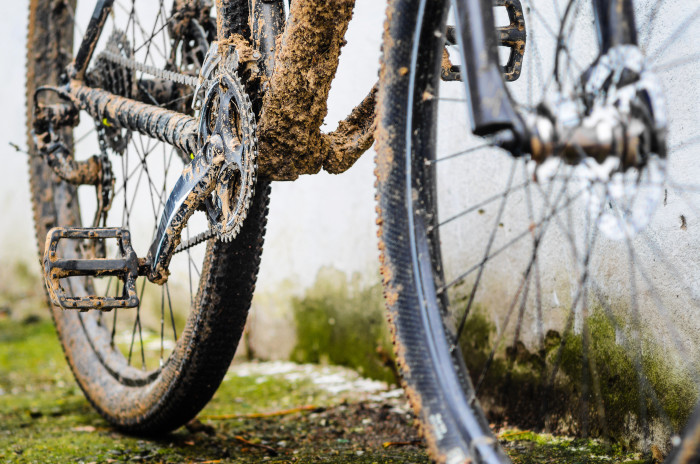
Autumn is when a neglected drivetrain starts making itself known. Water, grit and road grime combine into a fairly effective grinding paste, and if it’s left sitting on the chain, cassette and chainrings, wear can accelerate quickly.
You don’t need to perform a full workshop strip-down after every ride, but regular cleaning becomes much more important once the roads are dirty. Wipe the chain down, remove obvious grit and re-lubricate it before it starts sounding dry or rough.
A wet-weather chain lube can last longer in rain than a lightweight summer product, although it can also attract more dirt, so don’t just keep adding more on top. Clean first, then apply fresh lubricant and wipe away the excess.
If you’ve ridden through heavy rain or particularly filthy roads, deal with the bike sooner rather than leaving it coated in grime for three days and promising yourself you’ll sort it later.
Get the Lights Out Before You Actually Need Them
There’s always one ride where the light disappears far earlier than expected. Make sure front and rear lights are charged, working and easy to mount before autumn properly sets in. If they’ve spent the summer buried in a drawer, check that the batteries still hold charge and that any rubber straps or brackets haven’t perished.
Even if you don’t plan to ride after dark, daytime lights can help visibility in dull, wet conditions, especially when spray and low cloud make everything a bit grey.
It’s worth carrying a backup light on longer rides too. A small rechargeable rear light takes up very little space and is much more useful than discovering your main one is flashing red just as the afternoon starts disappearing.
Fit Mudguards Before You’ve Already Had Enough
Mudguards are not glamorous, but neither is arriving home with a wet stripe up your back and half the road attached to your drivetrain. If your bike can take full-length mudguards, they make a huge difference in wet conditions, particularly on longer road rides. Clip-on versions can still help if your frame doesn’t have mounts or clearance for a full set.
They’re also good for anyone riding behind you. If you ride in a group through autumn and winter, that may be the strongest argument of all.
Check Cables, Bolts and Anything That’s Started Making a Noise
Summer can hide small mechanical problems because the bike is being used in relatively kind conditions. Once water and grit get involved, they can get worse quickly. Check brake and gear cables for fraying or stiffness, particularly if shifting has started feeling less crisp. Make sure bolts around the stem, seatpost, bottle cages, racks and mudguards are secure, and pay attention to any new clicking, creaking or rattling.
Those little noises are worth investigating before winter, because moisture has a habit of finding its way into bearings, cables and contact points that were already starting to complain. If something has been “slightly annoying” for weeks, now is a good time to deal with it.
Think About What’s in Your Saddle Bag
The kit that worked perfectly in July may not be quite enough once the temperature drops and the weather becomes less predictable. Keep the usual repair basics — spare tube or tubeless plugs, tyre levers, pump and multitool — but think about adding a compact layer or lightweight waterproof if your rides are getting longer.
Cold and wet is a much bigger problem when you’re standing beside the road dealing with a puncture than when you’re riding hard and warm.
It’s also worth checking that the things already in your saddle bag are actually usable. Spare tubes can deteriorate if they’ve been rubbing around for months, CO₂ cartridges are not much help if you’ve already used them, and a multitool you borrowed and never put back is technically no longer part of your repair kit.
Clean the Bike More Often — but Don’t Overdo It
Autumn bikes get dirty quickly, and leaving grit sitting on moving parts is never a great idea. A quick rinse or wipe-down after a filthy ride can go a long way. Focus on the drivetrain, brakes, rims, frame and anywhere road muck tends to collect.
You don’t need to attack the bike with a pressure washer every time it gets muddy. High-pressure water can force dirt and moisture into bearings and seals where you really don’t want it. A bucket, brush, sponge and a bit of patience are often enough.
Once it’s clean, dry the bike properly and re-lubricate the chain rather than putting it away wet.
Autumn Riding Is Mostly About Staying Ahead of the Small Stuff
The biggest difference comes from dealing with small wear before wet weather makes it worse: tyres before they lose grip, brake pads before they disappear, chains before they start grinding and lights before you find yourself riding home in the dark.
A little attention now usually means fewer surprises later — and far fewer evenings spent wondering why the bike suddenly sounds like a bag of cutlery.